AI Video Generation 2026: Veo, Kling, Runway & Co. Put to the Test
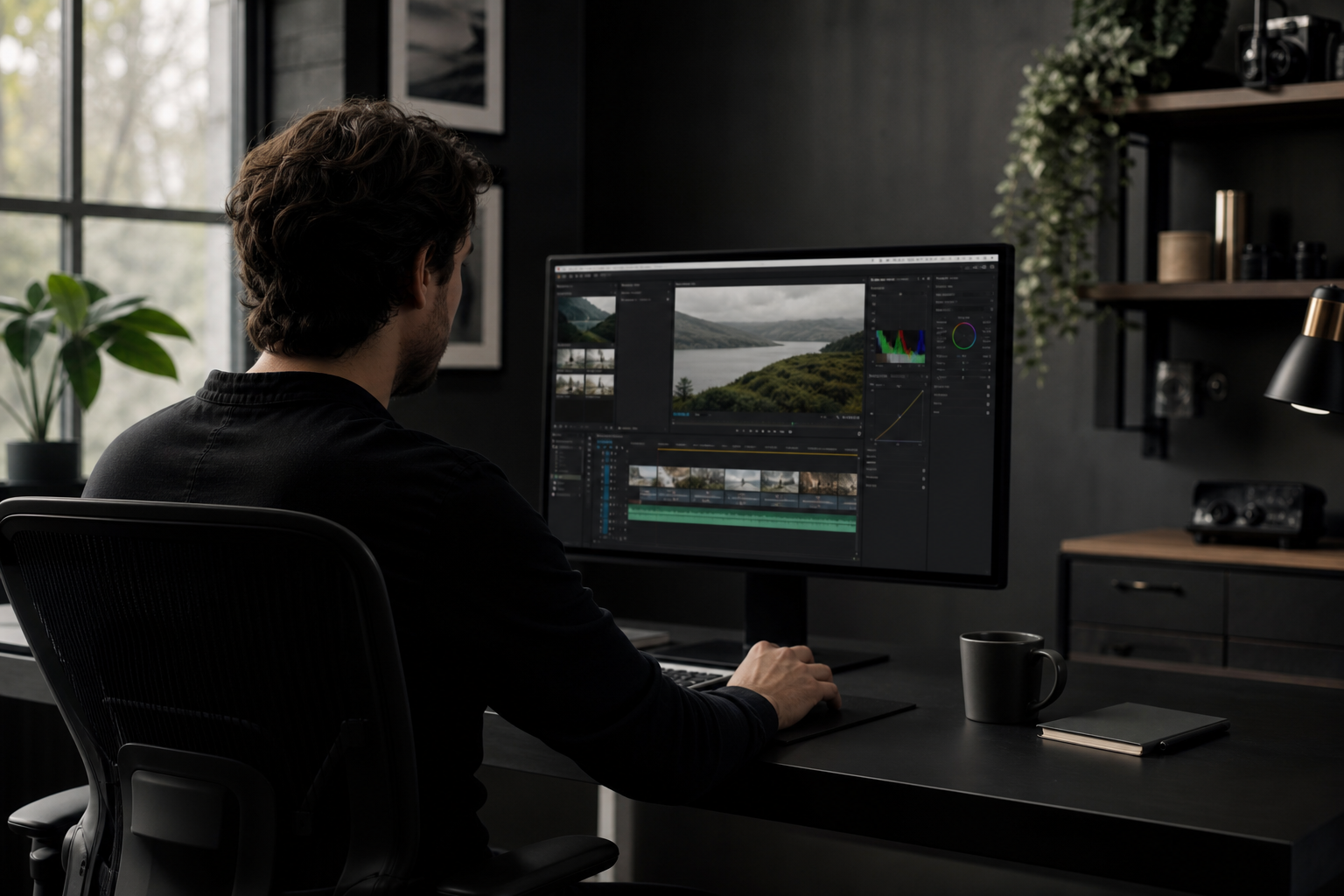
As of July 2026. The leaders in AI video generation in 2026 are Google Veo 3.1 and Kling 3.0 – both with native audio and 4K resolution. Runway Gen-4.5, Luma and Pika follow as strong all-rounders, while Synthesia and HeyGen lead on talking avatars. OpenAI's Sora has been discontinued and the Veo 3 API shut down: the market is consolidating.
This market overview by the Provimedia editorial team compares the ten most important tools for moving images – with pricing, resolution, clip length, audio capability and usage rights. If you want to create still images instead, you'll find the right models in our test of the best AI image generators 2026.
How has the AI video generation market changed in 2026?
The 2026 market is defined by consolidation: two prominent offerings have dropped out, while the remaining leaders have caught up sharply in quality.
Google shut down the Veo 3 API on June 30, 2026 and replaced it with Veo 3.1 (source: ai.google.dev).
According to the provider, OpenAI discontinued Sora as a web and app service on April 26, 2026; the associated API (sora-2 and sora-2-pro) is marked as "deprecated" and will be shut down by September 24, 2026 (source: help.openai.com). At the same time, Veo 3.1 and Kling 3.0 have reached a level, with native audio and 4K, that reshuffles the competition.
Which AI video tools lead the field in 2026?
At the top in 2026 are two models that combine 4K resolution with native audio: Google Veo 3.1 and Kling 3.0.
Google Veo 3.1: 4K, native audio, deep Google integration
Google Veo 3.1 (including a resource-efficient Lite variant) is accessible via the Gemini app, Flow, AI Studio and the API, and produces clips of 4, 6 or 8 seconds up to 4K resolution; using an extension, a video can be lengthened to around 148 seconds according to the provider (source: deepmind.google).
As one of the few models, Veo delivers native audio – dialogue and sound effects directly from the model – and adds the SynthID watermark to every output.
Subscriptions start with Google AI Plus at €4.99 per month (200 Flow credits), Pro costs €21.99 (1,000 credits) and Ultra starts at €99.99 (source: gemini.google). Via the API, 1080p costs $0.40 per second and 4K $0.60 per second; the Lite variant runs at $0.05–0.08 per second (source: ai.google.dev).
Kling AI: 4K and lip-synced audio at a promotional price
Kling AI is the strongest challenger from China and free in its basic version – but without commercial usage rights.
The Standard subscription is currently offered as a first-subscription promotion for $6.99 per month (regular list price $10), while Pro costs $25.99 per month (source: app.klingai.com).
Paid plans deliver 1080p up to 4K, allow commercial use and extend clips via an extension to up to three minutes.
According to the provider, the latest model, Kling 3.0 Omni, produces clips of 3 to 15 seconds with native, lip-synced audio.
Which all-round tools are still worth it in 2026?
Below the leading group sits a broad field of solid all-rounders, each with its own strengths in price, clip length or licensing certainty.
Runway Gen-4.5
Runway Gen-4.5 offers a one-time 125 free credits with a watermark.
The Standard plan costs $12 per month (paid annually, 625 credits, including 4K upscaling), Pro $28 and Max $76 (source: runwayml.com).
According to the provider, Runway generates in 720p and upscales to 4K; clips are 2 to 10 seconds long. Native audio is not documented.
Note for businesses: Under its terms of use, Runway may use both inputs and outputs for training – a data-protection aspect that companies should review before deployment (source: runwayml.com/terms). All outputs carry a C2PA provenance label.
Luma (Dream Machine)
Luma – the former Dream Machine – relies on its Ray3.2 model with 1080p in 16-bit HDR and clips of 5 or 10 seconds; it does not offer native audio.
Its pricing structure is in transition (as of July 2026): the live page lists Plus at $30, Pro at $90 and Ultra at $300 per month with no free tier, while an older support page still names a Free plan as well as a Lite package for $9.99. This discrepancy remains unresolved (source: lumalabs.ai).
Pika 2.5
Pika 2.5 offers a free tier with 80 credits per month in 480p without commercial use.
The Standard plan costs $8 per month (paid annually), Pro $28; paid plans unlock all resolutions, commercial use and watermark-free outputs, and allow clips of 5 to 25 seconds (source: pika.art).
Grok Imagine (xAI)
Grok Imagine Video 1.5 from xAI is, according to the provider, available via the SuperGrok subscription for $30 per month; the API costs $0.08 per second (source: x.ai).
According to the provider, the model produces videos up to 1080p with a length of 1 to 15 seconds and adds a fixed Grok watermark to every output.
Adobe Firefly Video
According to the provider, Adobe Firefly Video produces 5-second clips in 1080p and is of interest to businesses because of its licensing certainty.
The Standard plan costs $9.99 per month (up to 20 videos), Pro $19.99 – in Germany €21.99 including VAT (source: adobe.com).
Adobe markets Firefly as "commercially safe" because its training is based on licensed content, and automatically labels every output with C2PA content credentials.
Which tools create AI avatars and talking videos?
Avatar videos form their own category in 2026: instead of generating scenes, Synthesia and HeyGen have photorealistic presenter avatars speak from plain text.
Synthesia
Synthesia relies on its Express-2 model, delivers 1080p and advertises "no limit on duration" as well as over 160 languages.
The Starter plan costs $29 per month ($18 paid annually), Creator $89 per month (source: synthesia.io). The exact limits of the free offering are not clearly documented.
HeyGen
HeyGen specialises in talking heads and, with Avatar IV, offers a free tier with one to three videos, a maximum length of one minute and a watermark – not for commercial use.
Creator costs $29 per month (1080p, 30 minutes), Pro from $49 (4K) and Business $149; on the paid plans the output belongs to the user and may be used commercially (source: heygen.com).
What do AI video tools cost in 2026 by comparison?
Entry prices in 2026 range from €4.99 per month (Google Veo AI Plus) to around $30 per month for Grok Imagine or Luma; API models bill by the second. The following table summarises the key figures (as of July 2026; prices in USD unless marked as €).
| Tool | Price from | Max. resolution | Clip length | Native audio | Commercial on free tier |
|---|---|---|---|---|---|
| Google Veo 3.1 | €4.99/month (EUR) | 4K | 4–8 s (ext. up to ~148 s) | Yes | No free tier |
| Kling 3.0 | $6.99/month (promo) | 4K | 3–15 s (ext. up to 3 min) | Yes | No (Basic) |
| Runway Gen-4.5 | $12/month | 4K (upscale) | 2–10 s | No | No (watermark) |
| Luma (Ray3.2) | from $9.99–30/month | 1080p | 5–10 s | No | Pricing in transition |
| Pika 2.5 | $8/month | all (paid) | 5–25 s | n/a | No (480p) |
| Grok Imagine 1.5 | $30/month | 1080p | 1–15 s | n/a | n/a |
| Adobe Firefly Video | $9.99/month | 1080p | 5 s | n/a | No |
| Synthesia (avatar) | $29/month ($18 annually) | 1080p | no limit | Yes (speech) | limited |
| HeyGen (avatar) | $29/month | 4K (Pro) | up to 30 min | Yes (speech) | No |
OpenAI Sora is deliberately missing from the table: the service was discontinued in 2026 and is no longer a reliable recommendation. Disclaimer: All prices are a non-binding guide, not an offer or price commitment; as of July 2026, without warranty. Providers change plans and model versions constantly.
What should businesses watch out for with AI videos?
For professional use, beyond image quality it is above all usage rights, provenance records and the upcoming labelling obligation that count.
Provenance records: Runway, Adobe and Synthesia add C2PA content credentials to their outputs, while Google uses the SynthID watermark. For the remaining tools, no reliable information is available.
Free tiers without commercial rights: Kling Basic, Pika Free and HeyGen Free are explicitly not cleared for commercial use – a frequently overlooked risk.
Training feedback loop: Providers such as Runway and CapCut reserve the right to use inputs and outputs for their own training. Anyone uploading confidential material should take these clauses seriously as a data-protection caveat.
AI labelling: The transparency obligations under Article 50 of the EU AI Act (EU AI Regulation) take effect on August 2, 2026. Only the machine-readable marking under Art. 50(2) receives a transition period until 2 December 2026 for generative systems placed on the market before 2 August 2026 (political omnibus agreement, May 2026); the other transparency obligations of Art. 50 apply from 2 August 2026. This article is general information and not legal advice.
If you want your team to work with generative AI in a competent and responsible way, you can build the necessary AI skills in a targeted manner – for example through our AI skills training with certificate.
Frequently asked questions about AI video generation in 2026
What are the best AI video tools in 2026?
Google Veo 3.1 and Kling 3.0 lead the field because they combine 4K resolution with native audio. Runway Gen-4.5, Luma and Pika 2.5 are strong all-rounders, while Synthesia and HeyGen lead on talking avatars.
What happened to OpenAI Sora?
According to the provider, OpenAI discontinued Sora as a web and app service on April 26, 2026. The API models sora-2 and sora-2-pro are marked as "deprecated" and will be shut down by September 24, 2026 (source: help.openai.com). Sora is therefore no longer a viable recommendation.
Which AI video tools offer native audio?
Native audio – dialogue and sound effects directly from the model – is offered in 2026 above all by Google Veo 3.1 and Kling 3.0 Omni (lip-synced). Runway and Luma provide no documented native audio; avatar tools such as Synthesia and HeyGen generate synthetic speech.
Can AI videos from the free tier be used commercially?
Often not: Kling Basic, Pika Free and HeyGen Free are not cleared for commercial use, and free outputs usually carry a watermark. For commercial projects a paid plan is generally required.
What does AI video generation cost in 2026?
Entry prices range from €4.99 per month (Google Veo AI Plus) to around $30 per month for Grok Imagine or Luma. API providers bill by the second – Veo 3.1 costs $0.40 per second in 1080p (as of July 2026).
Do AI-generated videos have to be labelled?
The transparency obligations under Article 50 of the EU AI Act (EU AI Regulation) apply from August 2, 2026. Only the machine-readable marking under Art. 50(2) receives a transition period until 2 December 2026 for generative systems placed on the market before 2 August 2026 (political omnibus agreement, May 2026); the other transparency obligations of Art. 50 apply from 2 August 2026. This is general information, not legal advice.
Sources (primary sources, as of July 2026)
- Google DeepMind – Veo
- Google Gemini – Subscriptions
- Google AI – Gemini API pricing
- OpenAI Help Center (Sora discontinuation)
- Runway – Pricing and Terms of Use
- Kling AI – Membership
- Luma AI – Ray and Pricing
- Synthesia – Pricing
- HeyGen – Pricing
- Pika – Pricing
- xAI – Grok Pricing and docs.x.ai
- Adobe Firefly – Plans
Share this article
Stay up to date
Get the latest articles, insights and industry updates straight to your inbox.
Decide for yourself what Google shows you
Google lets you choose which sources appear more prominently in your search results: in Top Stories and in AI answers. Two clicks, and you see the sites you trust.
Add provimedia.de to my preferred sourcesRelated articles
More articles you might find interesting.
Learning Prompt Engineering: Definition, Building Blocks, and Real Examples
Prompt engineering sounds like a magic formula, but it is a learnable craft. This guide covers the six building blocks of a good prompt, with real before and after examples from everyday work.
What Is AI Literacy? Definition, Dimensions, and How to Build It
The EU AI Act requires companies to foster AI literacy, but what does that actually mean? We explain the definition, four practical dimensions, and how to build and demonstrate AI literacy in your company.
Claude Code 2.1.209 to 2.1.216: /fork and /verify Change
Claude Code 2.1.209 to 2.1.216: /fork and /verify change and can break existing setups. On top of that comes a new sandbox setting, a performance fix, and new limits.
Using these models with your team?
Build your team's AI competence and document it with a certificate of participation — in line with Article 4 of the EU AI Act.