TSE cash register: certified security module, requirement and registration
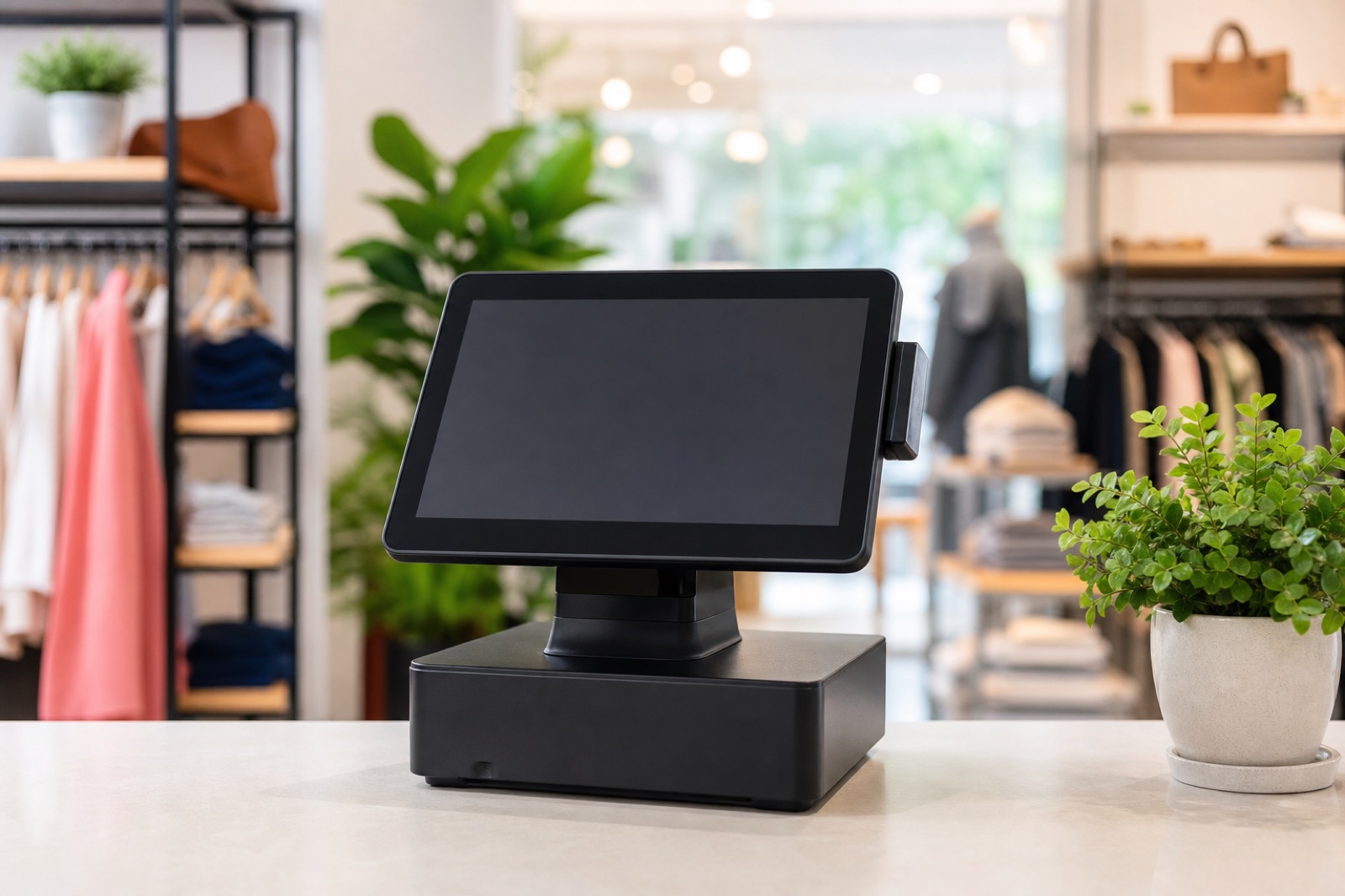
Anyone who operates an electronic cash register must protect it against subsequent manipulation and report its purchase to the tax office on time. Businesses that neglect the certified technical security module (TSE) or the ELSTER notification risk substantial fines.
In brief: under § 146a AO (the German Fiscal Code) and the Cash Register Security Ordinance (KassenSichV), electronic cash register systems must be equipped with a certified technical security module (TSE), document every business transaction with a receipt and be reported via ELSTER within one month of purchase. All businesses with an electronic cash register are affected; violations can be punished with fines of up to €25,000.
Why does the TSE requirement exist?
With § 146a AO and the Cash Register Security Ordinance, the legislator wants to prevent cash register data from being changed afterwards without anyone noticing. A certified technical security module logs every business transaction in such a way that the records can no longer be manipulated after the fact without this being detectable. For businesses, this above all means legal certainty: anyone who meets the requirements can demonstrate, during an audit by the tax authorities, that the cash register records were kept properly and without gaps.
Who is affected by the TSE requirement?
All businesses and self-employed people who use an electronic cash register system or an electronic vending machine are affected – from retail and hospitality to hair salons and trade businesses with a shop. Even open cash drawers can become subject to notification as soon as an electronic system is used in addition. Company size is irrelevant: the obligation applies equally to sole proprietors and larger businesses with several registers at different locations. A tool such as Company Audit lets you check in a structured way which tax obligations apply specifically to your business.
What do you need to do in practice?
First, check whether the existing cash register system already has a certified TSE or needs to be retrofitted. It is worth talking to the register provider or manufacturer, as many systems now offer retrofit solutions. In addition, issuing a receipt for every business transaction must be ensured technically, so that every transaction is documented without gaps. In parallel, internal cash management – that is, the ongoing documentation of income and expenses – should be organised so that it can be traced at any time.
By when and how often do you need to report?
Every new purchase or decommissioning of a cash register system must be reported via ELSTER within one month. This reporting obligation applies once per device, upon purchase or decommissioning, and is not recurring like an ongoing tax return. If you operate several registers, you accordingly have to report each individual register on time when it is newly purchased, replaced or permanently taken out of service.
What are the consequences of a violation?
Anyone who does not use a certified TSE, fails to issue receipts or misses the ELSTER notification risks fines of up to €25,000 under § 379 AO. In addition, a poorly secured cash register can lead to estimated additions to revenue during a tax audit if the tax authorities do not recognise the cash register records as proper. Both – fine and estimated additions – can in total be considerably more expensive than retrofitting and reporting on time.
Step by step: how to meet the TSE requirement
- Check whether the existing cash register system has a certified TSE or needs to be retrofitted.
- Ensure technically that a receipt is issued for every business transaction.
- Report any new purchase or decommissioning of a cash register system via ELSTER within one month.
- Keep the cash book or cash count documentation without gaps.
- Archive the TSE certificate and the notification confirmations.
In practice, many register providers handle the ELSTER notification as an additional service – it is worth clarifying this with the provider in advance so that the deadline is not missed by accident. Open cash drawers also have to be reported as soon as an electronic system is used, which is why an early inventory of all registers used in the business is recommended.
Frequently asked questions
What is a TSE?
The technical security module (TSE) is a certified security module that logs every cash register transaction in a tamper-proof way. It is prescribed for electronic cash register systems by § 146a AO and the Cash Register Security Ordinance (KassenSichV) and must be supported by the cash register system in use.
Do open cash drawers also have to be reported?
A purely open cash drawer without any electronic component is not covered by the TSE requirement. However, as soon as an electronic system is used in addition, that system also becomes subject to notification, regardless of whether the open cash drawer continues to be kept in parallel.
By when must a new register be reported?
The notification via ELSTER must be made within one month of purchase. The same deadline applies to decommissioning a cash register system, for example when switching providers or shutting down permanently.
Which documents should be kept?
You should keep the TSE certificate, the confirmations of the ELSTER notification and gap-free cash book or cash count documentation. These documents serve as proof to the tax authorities if proper cash management is audited.
What fines are possible for violations?
Under § 379 AO, violations of the cash register security requirement can be punished with fines of up to €25,000. This applies both to the absence of a certified TSE and to a missed or late ELSTER notification.
Source: § 146a AO · KassenSichV. This article is general information and does not replace legal advice in an individual case. As of: July 2026.
Share this article
Stay up to date
Get the latest articles, insights and industry updates straight to your inbox.
Decide for yourself what Google shows you
Google lets you choose which sources appear more prominently in your search results: in Top Stories and in AI answers. Two clicks, and you see the sites you trust.
Add provimedia.de to my preferred sourcesRelated articles
More articles you might find interesting.
Recapitulative Statement (ZM), OSS, and Intrastat in EU Trade
ZM due by the 25th of the following month, OSS filed quarterly, Intrastat from the threshold: EU reporting obligations explained compactly.
Keeping the record of processing activities (ROPA)
Almost every business holding customer data must keep a record of processing activities under Art. 30 GDPR, or face fines of up to EUR 10 million.
Registering Packaging in the LUCID Register and Reporting Quantities
Selling packaged goods? Then registering in the LUCID packaging register before you start selling is mandatory – with no de minimis threshold.
Stay on Top of Your Business Obligations
In just a few minutes, Company Audit builds your personal compliance checklist — complete with a deadline calendar, reminders and an AI assistant. Built for the self-employed and SMEs.