First Aid Obligation at Work: Train First Aiders and Keep a First Aid Kit
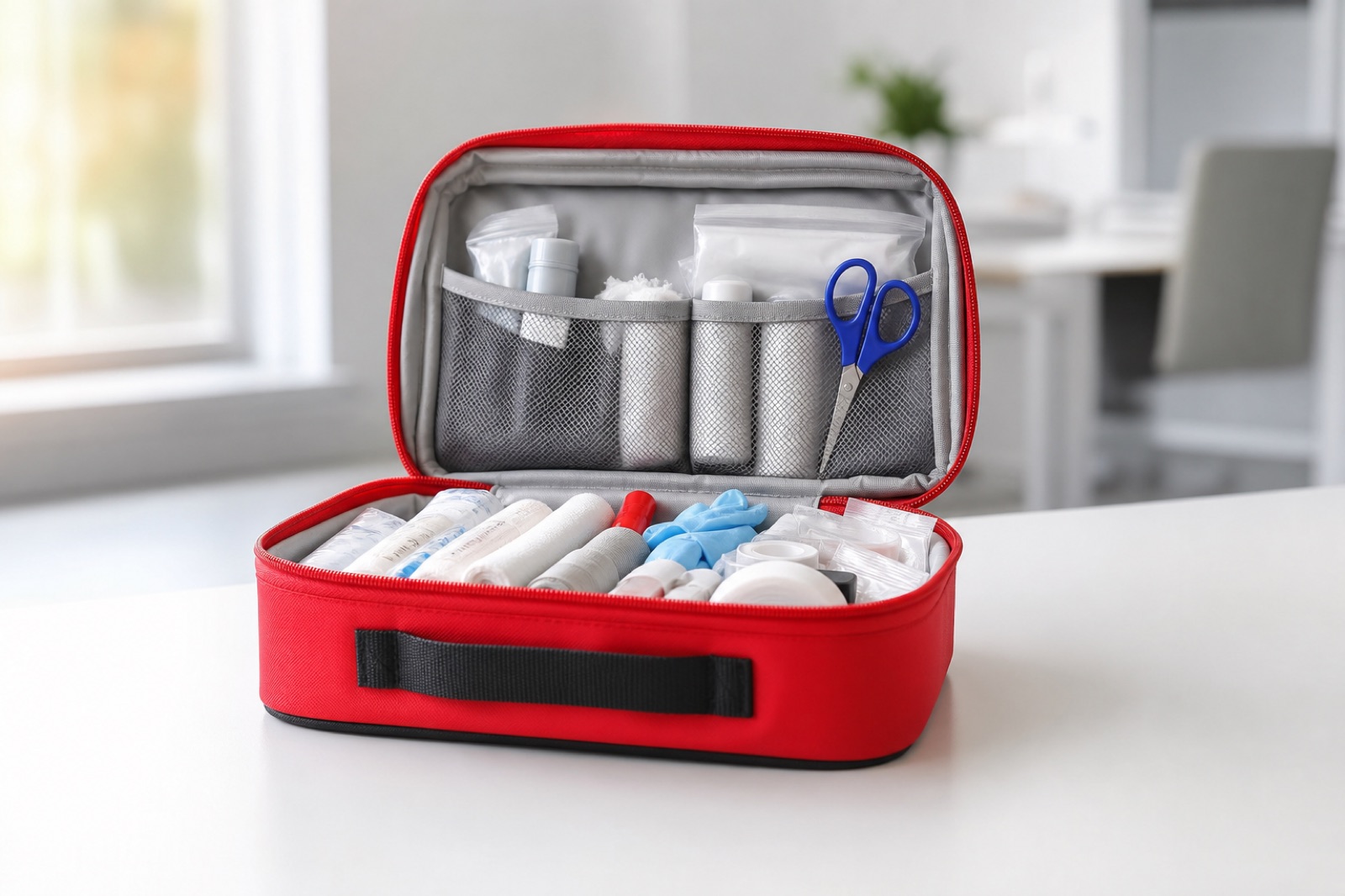
As soon as at least two people regularly work at the same time in a business, a first aid kit in the hallway is no longer enough: the legislator additionally requires at least one trained first aider who can act immediately in an emergency.
In brief: under § 26 DGUV Regulation 1 (DGUV Vorschrift 1, the accident prevention regulation of the statutory accident insurance) and ASR A4.3 (technical rules for workplaces), every business needs a trained first aider from two people present. With more than 20 employees, 5% of the workforce (offices, retail) or 10% (other businesses) must be trained. All employers are affected. Without adequate cover, fines and liability risks are possible.
Who is subject to the first aider obligation?
The obligation applies to every employer, regardless of industry, legal form or business size; the only decisive factor is that at least two people are regularly present in the business at the same time. This therefore affects not only industrial businesses but equally offices, practices, law firms, retail shops and workshops. Even self-employed persons with just one employee must meet the requirement as soon as that person is regularly in the business together with them. The total number of employees plays no role for the basic obligation; it only determines how many first aiders are ultimately needed in specific terms.
How many first aiders does your business need?
Up to 20 employees, one first aider is generally sufficient. With more than 20 employees, § 26 DGUV Regulation 1 and ASR A4.3 prescribe a minimum proportion: 5% of the workforce in office, retail and administrative businesses, and 10% in all other businesses, such as production, skilled trades or construction. The exact number therefore depends on headcount and type of business and should be reviewed regularly when staff changes occur, for example new hires, resignations or switches to part-time. If the workforce grows beyond the 20-person mark, the existing single first aider is generally no longer enough.
Which first aid kit do you have to keep?
First aid equipment includes a standards-compliant first aid kit: the small kit under DIN 13157 for smaller businesses, the large kit under DIN 13169 for larger workforces. Which size is appropriate depends on the number of employees and the type of business. The kit must be placed clearly visible and easily accessible to all employees, for example near break rooms, reception areas or workplaces with an increased risk of injury. With several sites or floors, more than one first aid kit is generally also sensible so that distances stay short in an emergency.
How does first aider training work?
First aiders are trained by an approved course provider; the Berufsgenossenschaften (statutory accident insurance carriers) generally cover the costs of first aid courses in full, so in practice there is no financial hurdle for employers or employees. Initial training is not the end of it, however: a refresher course is due every two years so that first aiders' knowledge stays up to date. Those who are first aiders in the business should also be documented clearly visibly by a notice with names and the most important emergency numbers so that no time is lost in an emergency.
What exactly do you have to do?
To implement the first aid obligation in a legally secure manner, five steps are needed:
- Determine the number of first aiders required based on headcount and type of business (5% or 10% from 20 employees).
- Have first aiders trained by an approved course provider.
- Provide a first aid kit under DIN 13157 (small) or DIN 13169 (large), depending on business size, and place it clearly visible.
- Schedule the first aiders' refresher course every two years.
- Put up a notice with the first aiders' names and emergency numbers in a clearly visible place.
Which of these obligations apply to your company in detail is shown at a glance by a tool such as Company Audit.
What are the consequences of a violation?
Anyone who fails to provide trained first aiders or to keep a standards-compliant first aid kit risks a fine from the competent Berufsgenossenschaft or supervisory authority. If an accident occurs in the business without first aid being given in time, liability risks for the employer arise in addition. First aid cover is therefore not just a formal obligation but also protects the company's own employees in an emergency and, in case of doubt, can help determine the outcome of an emergency. Anyone who implements the requirements early saves themselves both discussions with the supervisory authority and the risk of being left without trained help in an emergency.
Frequently asked questions
From how many employees do I need a first aider?
From two people regularly present in the business, at least one trained first aider is required, regardless of business size or industry.
How often must first aid training be refreshed?
First aiders should complete a refresher course every two years so that their knowledge stays up to date and available in an emergency.
Who bears the cost of the first aid course?
The competent Berufsgenossenschaft generally covers the costs of first aid courses in full.
Which standard applies to the first aid kit?
Smaller businesses need a first aid kit under DIN 13157, larger businesses one under DIN 13169, depending on the number of employees and the type of business.
Does the first aid kit have to be checked regularly?
Yes, the first aid kit should be checked regularly for completeness and the expiry dates of its contents and restocked as needed.
Source: § 26 DGUV V1 · ASR A4.3. This article is general information and does not replace legal advice in individual cases. As of: July 2026.
Share this article
Stay up to date
Get the latest articles, insights and industry updates straight to your inbox.
Decide for yourself what Google shows you
Google lets you choose which sources appear more prominently in your search results: in Top Stories and in AI answers. Two clicks, and you see the sites you trust.
Add provimedia.de to my preferred sourcesRelated articles
More articles you might find interesting.
Recapitulative Statement (ZM), OSS, and Intrastat in EU Trade
ZM due by the 25th of the following month, OSS filed quarterly, Intrastat from the threshold: EU reporting obligations explained compactly.
Keeping the record of processing activities (ROPA)
Almost every business holding customer data must keep a record of processing activities under Art. 30 GDPR, or face fines of up to EUR 10 million.
Registering Packaging in the LUCID Register and Reporting Quantities
Selling packaged goods? Then registering in the LUCID packaging register before you start selling is mandatory – with no de minimis threshold.
Stay on Top of Your Business Obligations
In just a few minutes, Company Audit builds your personal compliance checklist — complete with a deadline calendar, reminders and an AI assistant. Built for the self-employed and SMEs.